
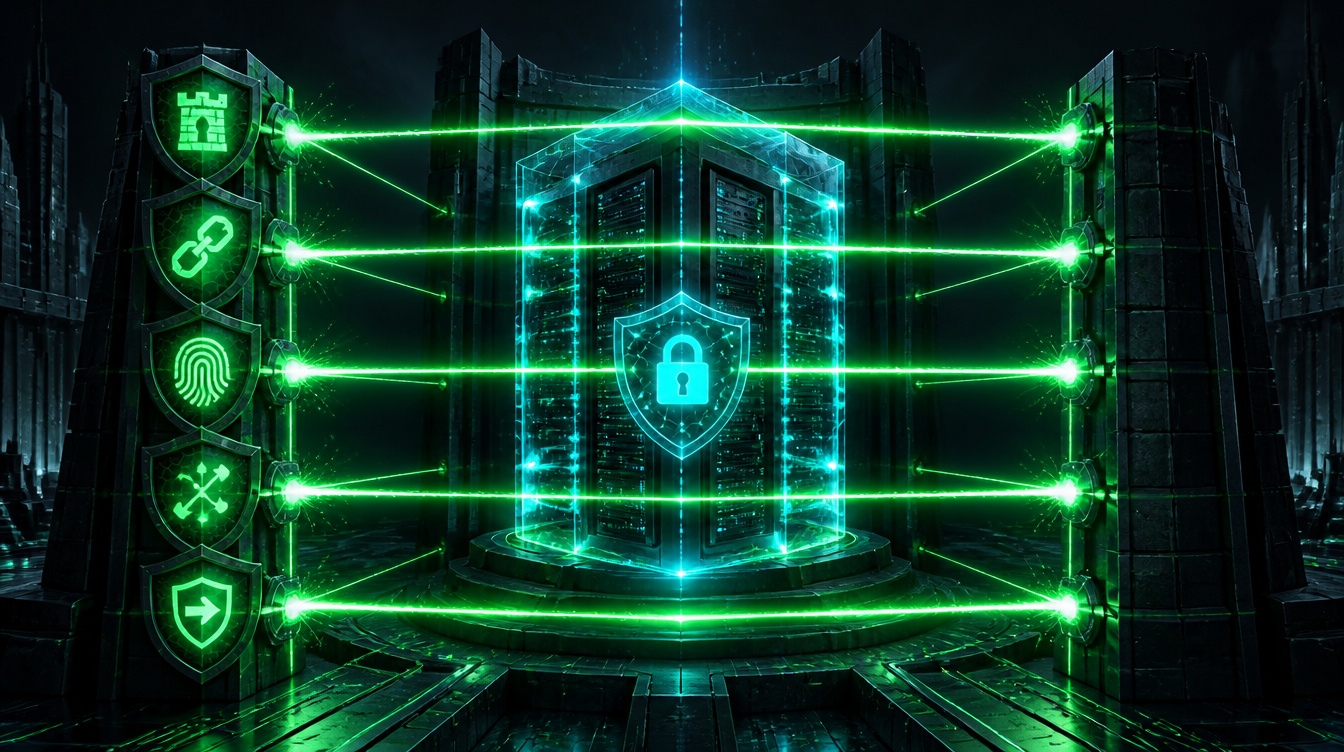
The whole disclosure, compressed into what to do about it — in order, with the
controls that actually work and the honest residual risk.
The remediation ladder
1. Upgrade — the non-negotiable first step.
The 2026 memory-safety batch is closed in 6.2.19, 7.2.10, 7.4.5, 8.2.3 and
8.6.3. Anything below the line is unpatched by definition (Part 8), and
nothing will change that. Upgrade the patched lines; migrate the others —
there is no fix coming.
2. Bind the port.
bind 127.0.0.1        # or a private interface, never 0.0.0.0
protected-mode yes
If nothing outside the host can reach 6379, Chain A collapses entirely.
3. Authenticate — even behind the bind.
requirepass <long-random>
"Authenticated user" is the CVE's requirement; make it an actual requirement,
not a shared .env secret.
4. Cut the dangerous surface.
rename-command CONFIG ""
rename-command RESTORE ""
rename-command MODULE ""
rename-command DEBUG ""
rename-command EVAL ""
The classic file-write chain needs CONFIG; the new batch needs RESTORE.
Removing both kills Chain A and Chain B's easiest trigger.
5. Run unprivileged, unforgiving.
A non-root user, no write path to cron or SSH directories, TLS if it crosses
any boundary you do not fully own. Add network segmentation and an IPS that
flags CONFIG SET + SAVE — it blocks the classic chain even on someone
else's misconfigured instance.
The migration option: Valkey
For organisations that do not want Redis 8's licence terms (RSALv2/SSPLv1, or
AGPLv3), Valkey is the Linux Foundation continuation from the last fully
BSD release (7.2.4, ~28k stars). It is wire-compatible with Redis clients,
patched, and the direction AWS and Google clouds have taken. For most
workloads it is a drop-in that removes both the patch gap and the licence
risk at once.
The one-command audit
Start every engagement with this, and you know within three seconds which
category you are in:
redis-cli -h <host> INFO server | grep redis_version
- ≥ 6.2.19: the 2026 batch is closed — then do steps 2–5 for exposure.
- 5.x / < 6.2.19: unpatched RCE by definition. Treat as a migration
project with a deadline, not a maintenance item.
Residual risk, honestly stated
With all five controls in place: low — the 2026 batch is patched, the
network door is shut, the dangerous commands are gone, and the file-write
chain has no legs.
Without the controls, on an unpatched version: the highest-probability real
breach in the corpus — a standing, unpatched RCE behind a door that was
never locked, on the #8 database in the world.
The bottom line of the whole series
Redis is one of the best-engineered tools in the stack: honest, fast, simple,
and genuinely excellent at what it does. The flaw that matters is not in its
performance — it is in its default trust model, built in 2009 and never
rebuilt. The first and most fundamental vulnerability in the corpus —
CVE-2026-23479, the use-after-free in the unblock-client flow — matters
precisely because Redis was never given the security posture its success
required: enormous attack surface, no authentication by default, plaintext
wire traffic, abandoned old versions, and a fork that made staying-in-place a
choice.
The fix is an upgrade and five configuration lines. There is no excuse for the
easiest breach to keep being the most common one.
OwlMan Disclosure — Redis. Ten parts: what it is, who runs it, the eight jobs
it does, the alternatives it beat, the engine inside, the door that was never
locked, the flaw that will never be patched, the versions that will never be
fixed, the chains that exploit them, and the five lines that close it all.
Written for the noob who runs it, the operator who inherited it, and the
auditor who must explain it in one document.

Comments (0)